
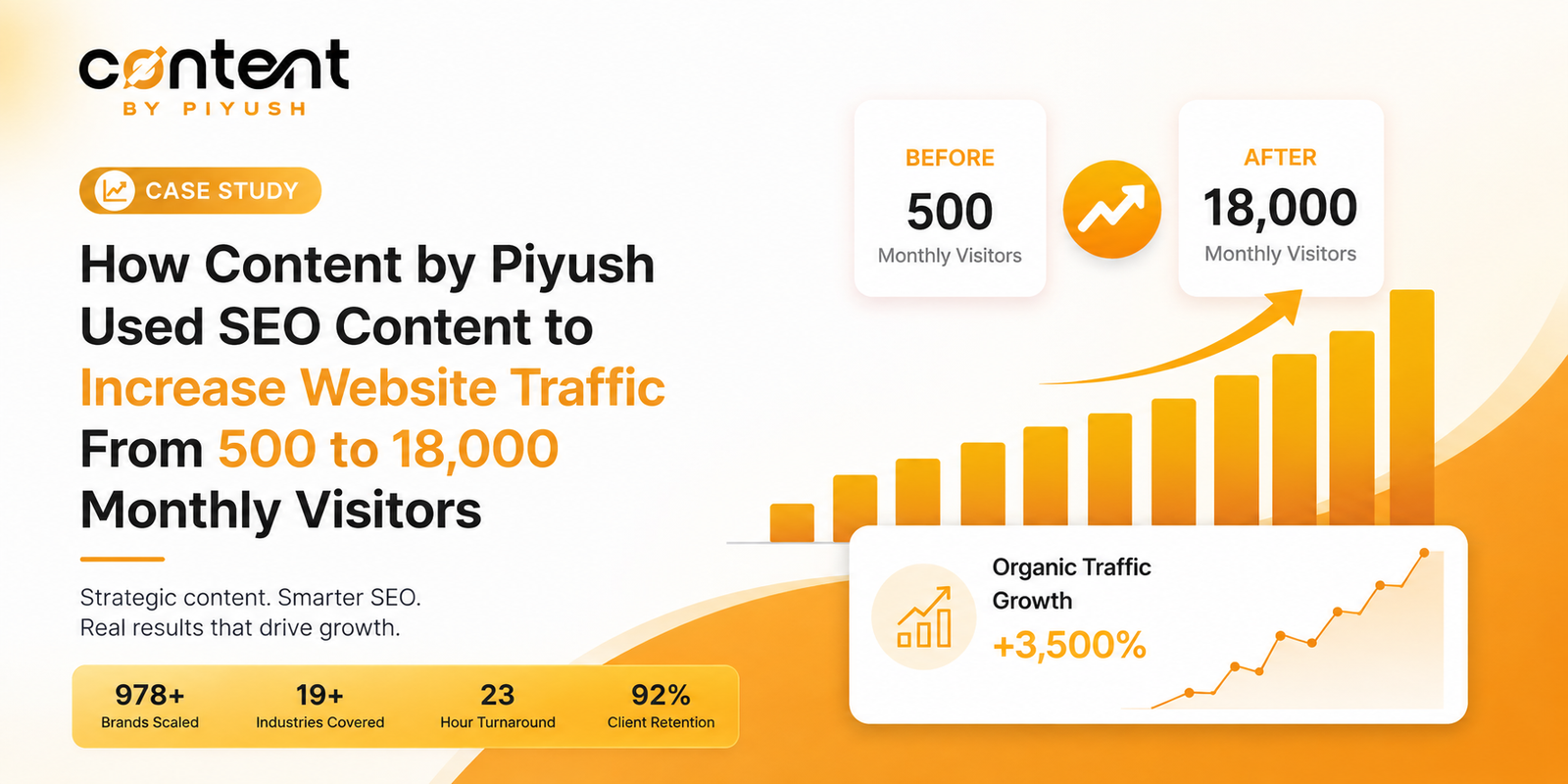
Content by Piyush helped grow a website from 500 monthly visitors to 18,000 monthly visitors using an SEO-led content strategy. That represents a 36X increase in monthly traffic, an absolute gain of 17,500 visitors per month, and a 3,500% increase from the original baseline.
The result was not about publishing articles simply to increase the number of pages on a website. The strategy centered on creating content around real search demand, matching user intent, improving topical coverage, strengthening individual pages, and treating every article as part of a larger organic acquisition system.
This SEO content case study explains the thinking behind that approach and, equally importantly, the principles businesses can apply when deciding whether their current content is actually capable of generating sustainable search visibility.
The SEO Content Results at a Glance
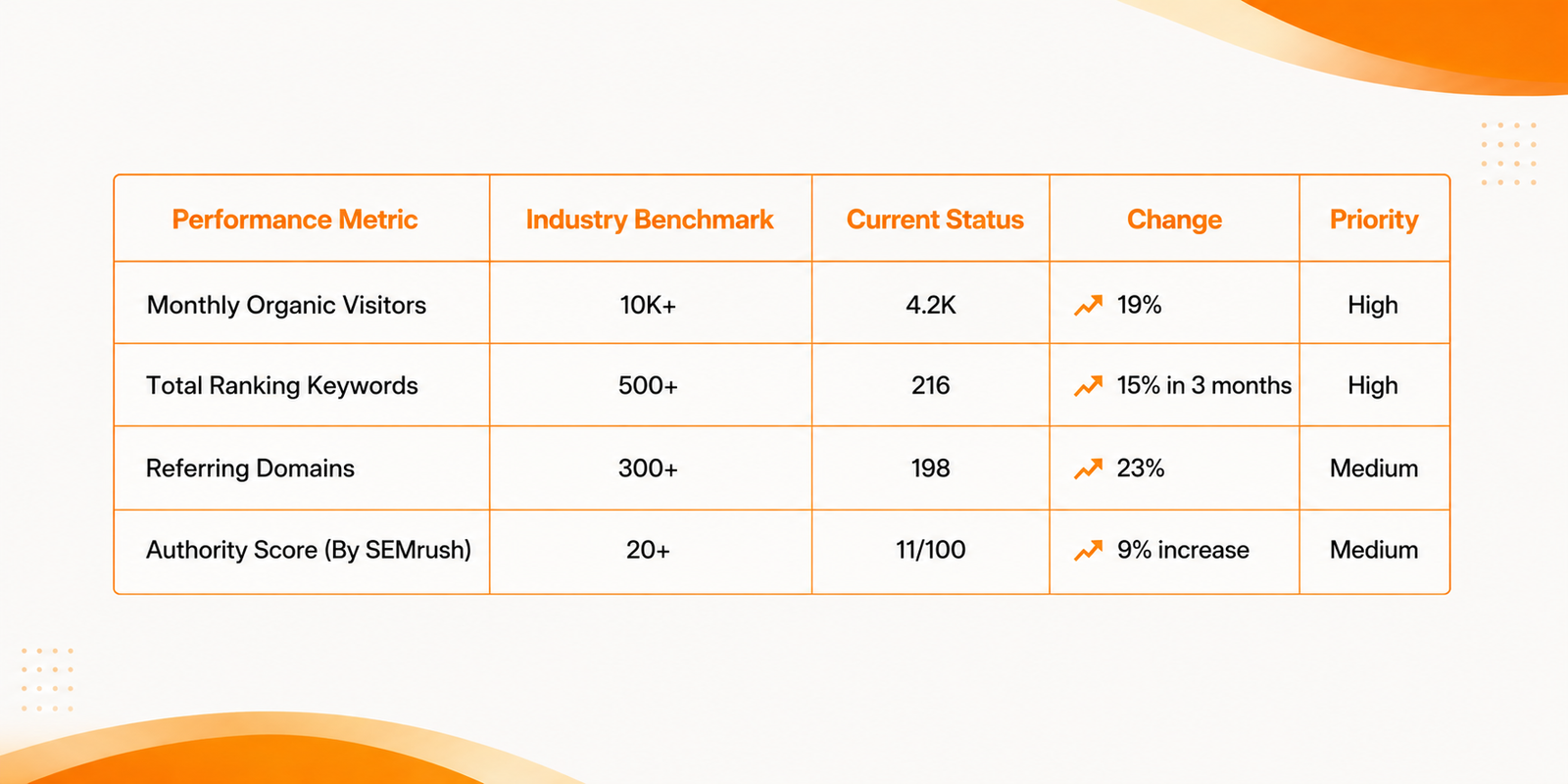
The arithmetic is straightforward.
18,000 ÷ 500 = 36
The site therefore reached 36 times its original monthly traffic level.
Percentage growth is calculated as:
(18,000 − 500) ÷ 500 × 100 = 3,500%
Why Growing From 500 to 18,000 Monthly Visitors Is More Difficult Than Simply Publishing More Content
The internet does not suffer from a shortage of content.
It suffers from a shortage of content worth finding.
An Ahrefs analysis of approximately 14 billion pages found that 96.55% received no organic traffic from Google. Only a small fraction of published pages generated measurable Google search traffic.
That finding exposes a fundamental problem with volume-led content marketing.
Publishing 50 articles does not automatically create more search visibility than publishing 10 articles. The important question is whether those pages satisfy an identifiable search need and provide enough value to compete with pages Google already trusts.
Google makes the same point differently. Its Search Central guidance states that there is no preferred Google word count. Creating an article simply to reach 1,500, 2,000, or 3,000 words does not make the page more deserving of a ranking.
SEO content therefore needs to move beyond:
“Which keyword should we insert?”
The better questions are:
“Why is someone searching for this?”
“What information do the current results fail to provide?”
“What can this business contribute that generic AI-generated pages cannot?”
“How does this article connect with the commercial objective of the website?”
That change in thinking is where scalable content-led growth begins.
The Starting Point: 500 Monthly Visitors
Every SEO content strategy needs a baseline.
For this case study, that baseline was approximately 500 monthly website visitors.
A number such as 500 provides enough information to establish the starting point, but traffic alone does not explain what needs to change.
Effective SEO content planning therefore requires looking beyond the headline traffic figure and examining the underlying search opportunity.
That means understanding the subjects relevant to the business, the questions potential customers ask, the language they use, the search intent behind those queries, and the pages already competing for those searches.
This is where keyword research becomes useful—but only when it is treated as audience research rather than a spreadsheet exercise.
Step 1: Build Content Around Search Intent Instead of Search Volume Alone
A high-volume keyword can generate impressive numbers in a keyword research tool while being commercially irrelevant to a particular business.
A smaller query may have considerably stronger business value.
The difference is intent.
Someone searching:
“What is SEO content writing?”
is likely researching.
Someone searching:
“SEO content writing services”
may be evaluating providers.
Someone searching:
“SEO content writing services pricing”
is considerably closer to a purchasing decision.
A complete SEO content strategy therefore needs informational, comparative, commercial, and transactional content rather than hundreds of articles sitting exclusively at the top of the funnel.
This creates an organic journey:
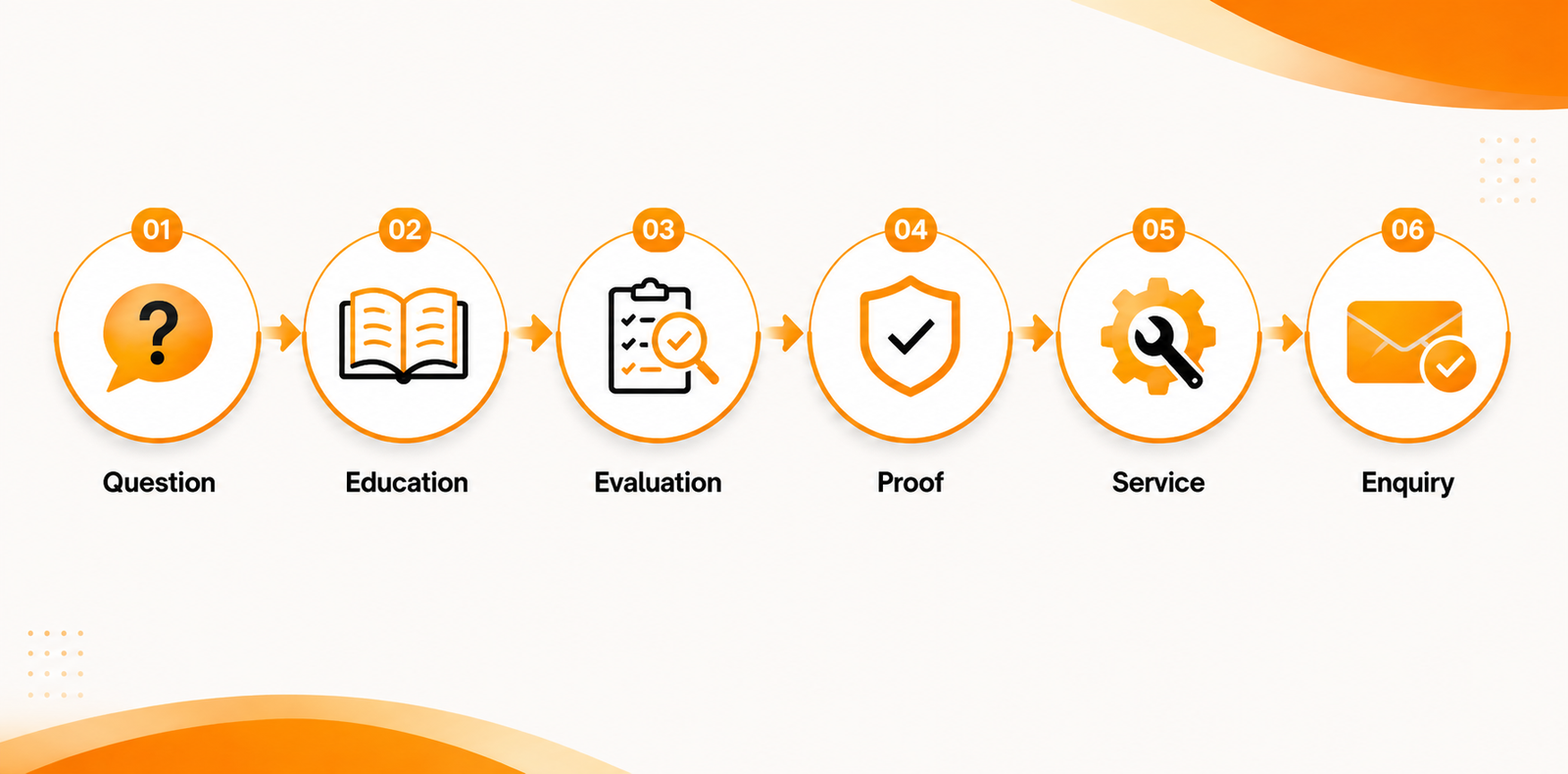
That same principle now forms the foundation of the Content by Piyush content model.
Instead of looking at an article as a standalone URL, we look at its role within the buyer journey.
Step 2: Replace Random Blogging With Topical Content Architecture
One of the biggest differences between blogging and strategic SEO content is architecture.
Random blogging asks:
“What should we write this week?”
An SEO content system asks:
“What subject should this website become a credible resource for?”
Consider a company targeting content writing customers.
Publishing isolated articles about social media, ChatGPT, entrepreneurship, branding, productivity, email marketing, SEO, leadership, advertising, and dozens of unrelated trends may produce a large blog archive.
It does not necessarily build concentrated authority around content writing and content marketing.
A more deliberate architecture would connect related subjects.
For Content by Piyush, that means establishing tightly connected expertise around areas such as:
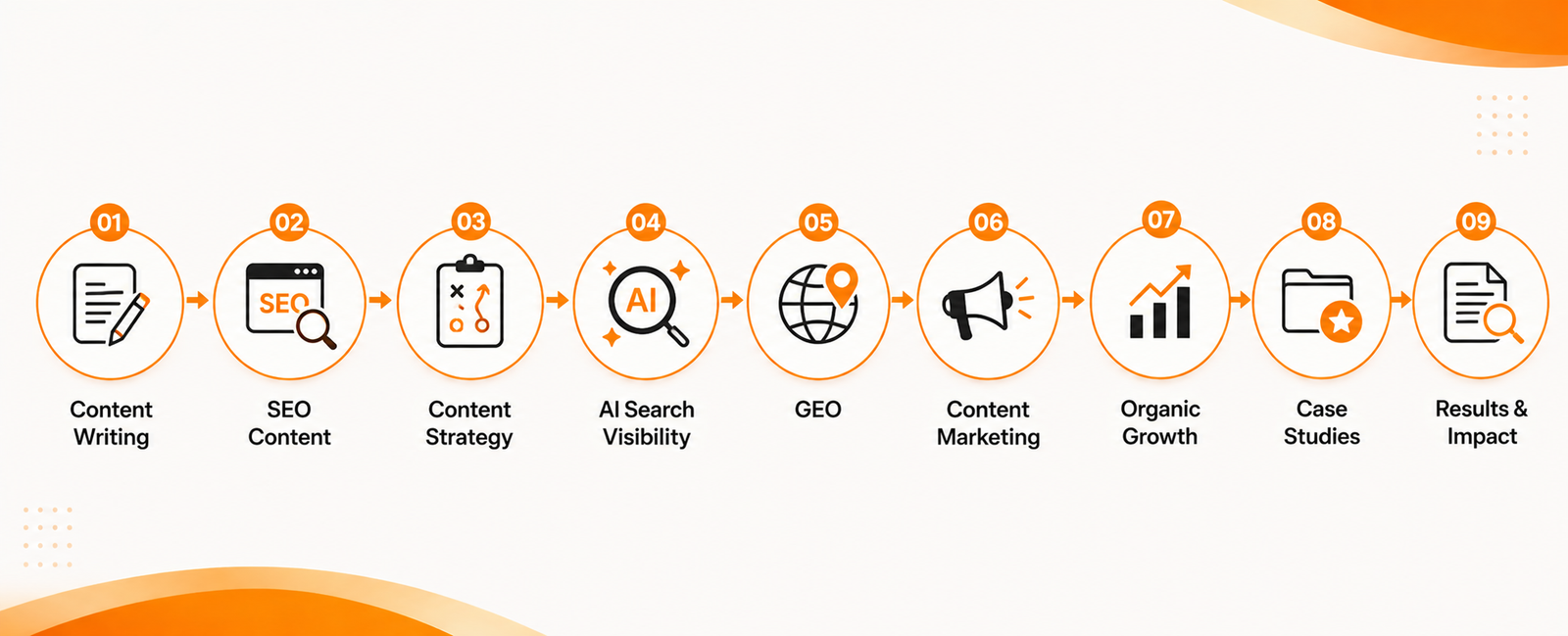
The individual articles reinforce one another while relevant internal links help users and search engines understand their relationship.
The result is not simply “more content.”
It is greater topic depth.
Step 3: Create the Content for the Searcher Before Optimizing It for the Algorithm
Google’s documentation repeatedly emphasizes people-first content.
That does not mean SEO becomes irrelevant.
It means SEO works best when it helps search engines discover and understand useful information rather than attempting to compensate for weak information.
For every important article, the content needs to answer four questions.
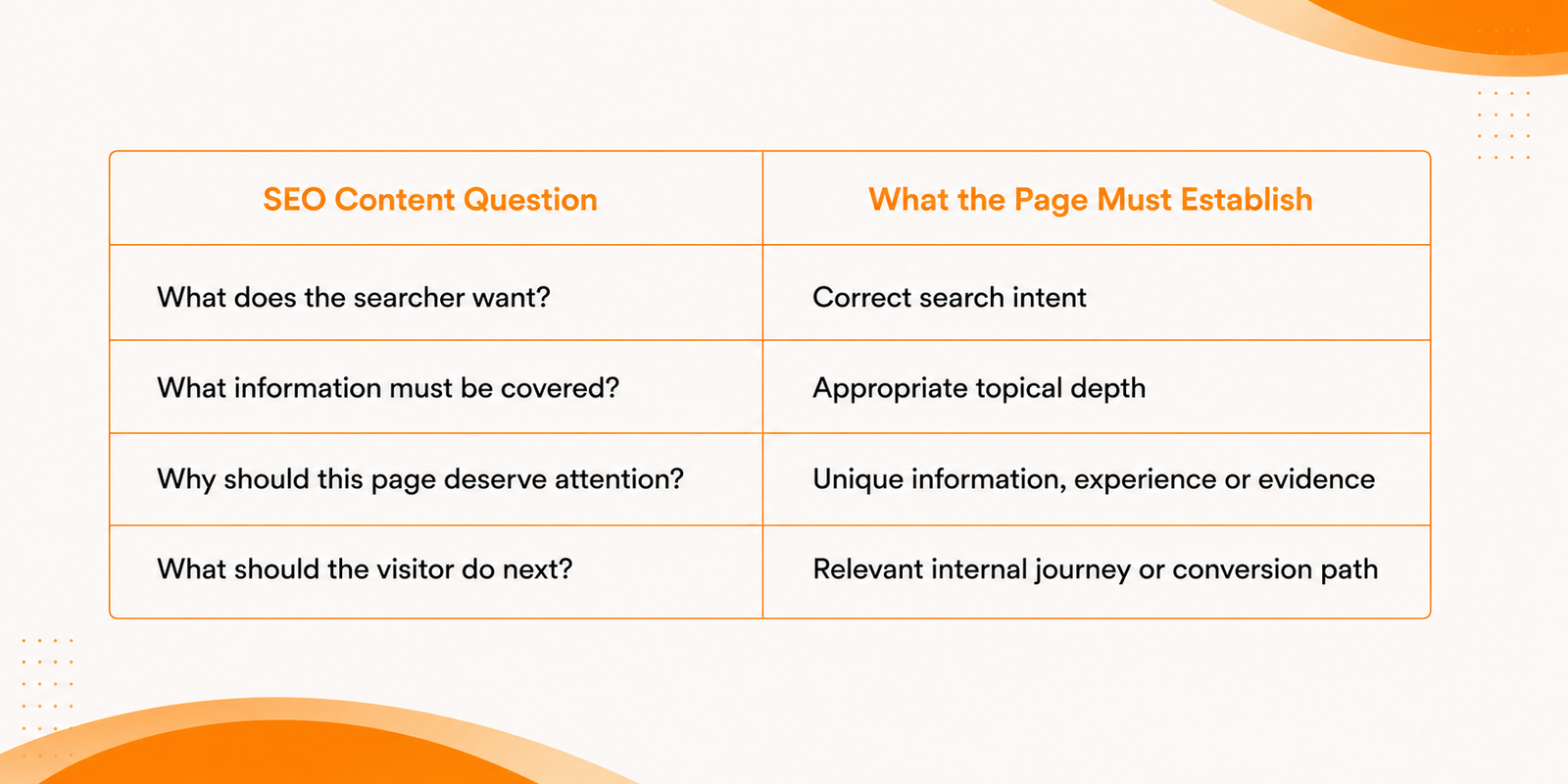
This prevents one of the most common content mistakes: writing an article that targets the right keyword but answers the wrong question.
A searcher asking how something works does not want to encounter 500 words of sales copy before receiving an explanation.
Likewise, a buyer searching for a service provider does not necessarily want a 4,000-word beginner’s guide before seeing evidence, capabilities, processes, pricing considerations, and results.
Search intent determines format.
Step 4: Write Content That Adds Information Instead of Repackaging Information
This requirement has become significantly more important as generative AI has lowered the cost of producing generic text.
An Ahrefs study examining 900,000 newly published webpages in April 2025 estimated that 74.2% contained some AI-generated content.
That does not mean AI-assisted content cannot perform.
It means information that merely repeats what thousands of other pages already say has become easier than ever to manufacture.
Google’s 2026 guidance for generative AI search consequently emphasizes what it calls valuable, non-commodity content.
The competitive advantage increasingly comes from information that cannot be reproduced from a generic prompt.
That includes real results.
- Real screenshots.
- Original observations.
- First-hand experience.
- Proprietary processes.
- Original datasets.
- Expert commentary.
- Specific examples.
- Case studies.
The result in this article, 500 to 18,000 monthly visitors, is itself more useful than another paragraph claiming that “SEO content helps increase traffic.”
One is an opinion.
The other is measurable evidence.
Step 5: Optimize Each Article Around a Primary Search Purpose
SEO optimization should make the subject of a page clearer rather than making the writing unnatural.
A properly optimized article generally requires alignment between its main search purpose and the page elements Google and users encounter.
That includes the title, H1, introductory answer, headings, body copy, image context, internal anchors, supporting sources, URL structure, and metadata.
The primary phrase should appear where it helps establish meaning.
It does not need to be forced into every paragraph.
For this page, for example, SEO content case study is the central query.
Related phrases such as content marketing case study, SEO content strategy, SEO content writing, website traffic growth, and organic growth strategy help Google understand the broader semantic context naturally.
This is different from keyword stuffing.
Modern search systems are capable of understanding related concepts. Repeating the exact phrase dozens of times does not demonstrate greater expertise.
Step 6: Use Internal Links to Turn Individual Articles Into an Authority Network
Internal linking is one of the simplest ways to prevent good articles from becoming isolated assets.
For Content by Piyush, this case study should not operate independently.
Someone interested in how SEO content produced measurable growth may also want to understand how content writing is changing in the AI era.
That person may then want to learn how pages can become more suitable for citation in ChatGPT and AI search.
After evaluating those educational resources, the buyer may be ready to investigate professional SEO content writing services.
The ideal route becomes:
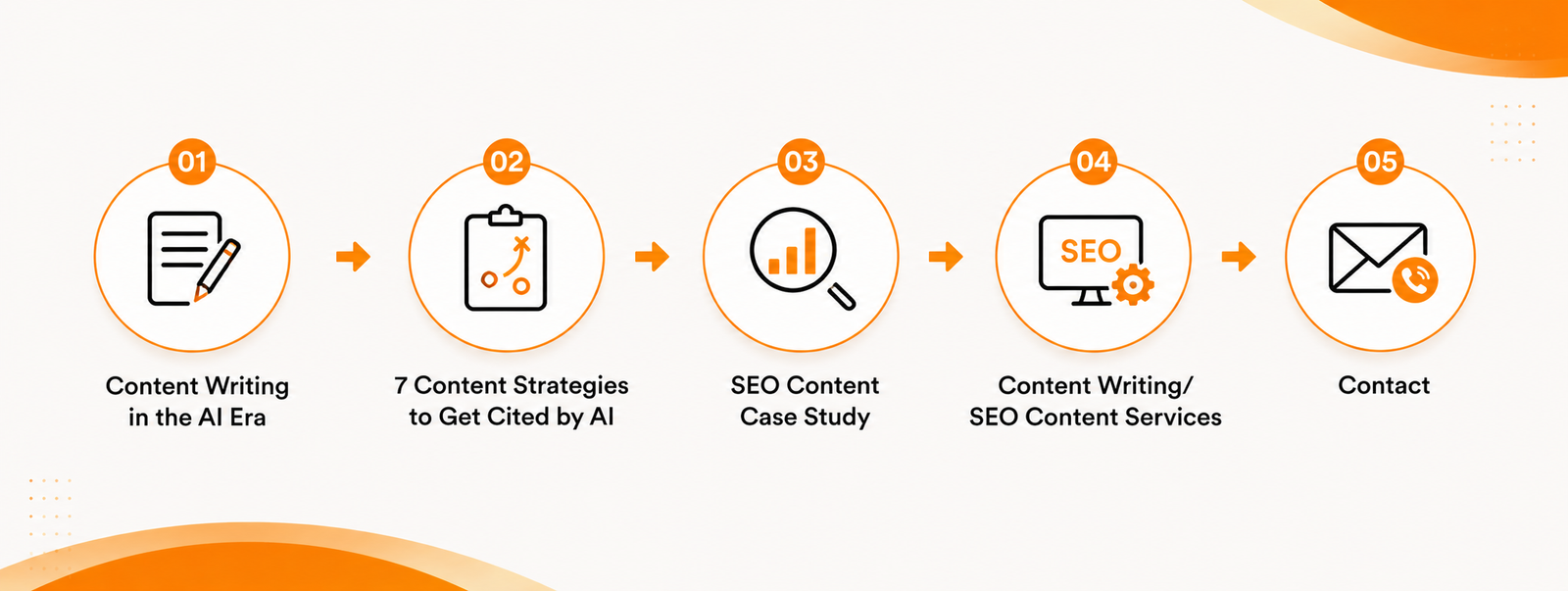
The relationship works in both directions.
Educational pages transfer interested users toward evidence.
Evidence transfers interested users toward services.
Service pages can link back to the case study to support commercial claims.
This is how content becomes a funnel instead of a collection of blog posts.
Step 7: Measure Content Using Business-Relevant Metrics
Traffic is an important SEO metric, but it is not the only metric.
A page generating 10,000 irrelevant visits can be less valuable than a page producing 500 visits from people actively researching a service.
SEO content performance therefore needs multiple layers of measurement.
Google Search Console can establish search visibility through impressions, clicks, click-through rate, queries, pages, countries, devices, and positions.
Analytics platforms can show what happens after the visitor reaches the website.
Business systems can show whether visibility eventually results in enquiries and customers.
For a serious SEO content program, measurement should therefore progress from:
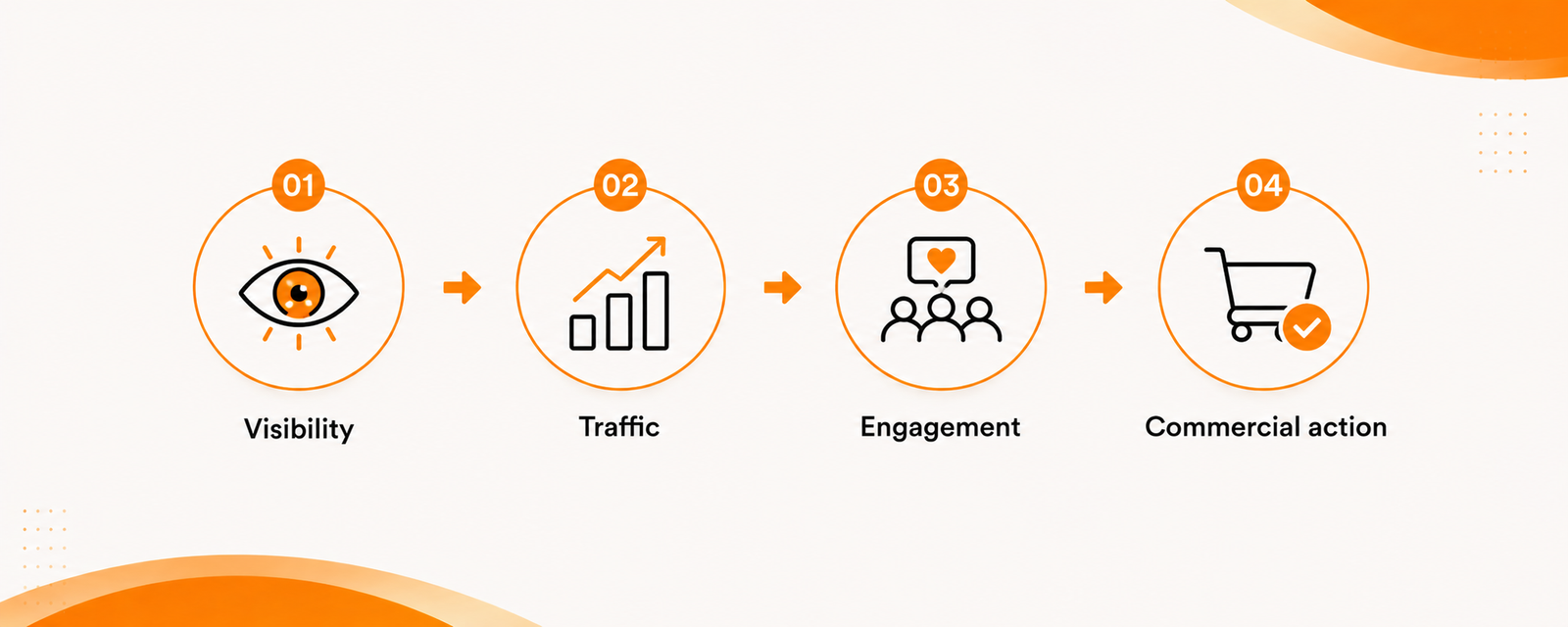
The 500-to-18,000 result establishes the traffic growth achieved in this case.
Future case studies should go one step further by preserving baseline and final data for enquiries, qualified leads, conversion rate, ranking keywords, top-three rankings, assisted conversions, and attributed revenue.
Those numbers make an SEO content case study substantially more useful to a prospective buyer.
What This 36X Traffic Increase Actually Demonstrates
The most important lesson from this project is not that every website can automatically move from 500 to 18,000 monthly visitors.
SEO cannot make that promise responsibly.
Different websites operate with different levels of demand, competition, authority, technical health, content quality, backlink profiles, budgets, and publishing histories.
The defensible conclusion is narrower:
A structured SEO content program can become a significant organic acquisition asset when the content is built around genuine search demand, intent, topical relevance, quality, and measurement.
In this particular case, the measured website traffic moved from:
500 → 18,000 monthly visitors
That equates to:
+17,500 additional monthly visitors
36X the original traffic
+3,500% growth from baseline
These are the figures that should anchor the case study because they are specific enough to verify.
What Has Changed Now That Google Search Includes Generative AI?
The mechanics of search are changing, but Google has not recommended abandoning SEO.
Its current guidance states that the same foundational SEO practices remain applicable to AI Overviews and AI Mode.
A page must still be crawlable, indexed, eligible for Search, useful to users, and technically accessible before it can be considered as a supporting source in Google’s AI search experiences.
Google’s 2026 generative AI guidance goes further by advising publishers to prioritize original, expert-led, non-commodity information rather than trying to exploit GEO shortcuts.
That makes case studies especially valuable.
A generic article can explain that SEO content may increase traffic.
A real case study can provide the baseline, result, calculation, strategy, limitations, and evidence.
The second format gives both readers and machine systems considerably more unique information to work with.
Does Schema Markup Automatically Increase AI Citations?
No.
Structured data is useful because it can help search engines understand information such as an article’s headline, author, dates, and publisher.
It should still be implemented correctly.
But schema should not be presented as a shortcut to AI visibility.
A 2026 Ahrefs study tracked 1,885 pages that added schema markup and found that adding schema did not produce a measurable citation increase across the AI platforms it analyzed.
That is an important distinction.
Use structured data because it improves machine-readable context and because Google recommends applicable Article markup.
Do not promise that inserting JSON-LD will automatically increase ChatGPT or Google AI Overview citations.
For this case study, the recommended schema is Article/BlogPosting, connected to a genuine Person author entity for Piyush Sethia and the Content by Piyush publisher entity.
The visible article itself must remain the source of the real value.
Why Proof-Led SEO Content Has Become a Competitive Advantage
It is easy for a business to say:
“We create high-quality content.”
It is harder to show:
Starting traffic: 500 monthly visitors
Ending traffic: 18,000 monthly visitors
Absolute increase: 17,500 visitors
Growth: 3,500%
Traffic multiple: 36X
Specific evidence reduces ambiguity.
It also answers the question prospective clients eventually ask every content writer or content agency:
Can your content produce measurable results?
A strong portfolio should answer that question before the sales call begins.
That is why case studies belong at the bottom of the content funnel.
TOFU articles demonstrate knowledge.
MOFU content demonstrates methodology.
BOFU case studies demonstrate evidence.
The service page then gives the visitor a way to act.
What Businesses Should Look for Before Hiring an SEO Content Writer
Businesses evaluating SEO content writing services should look beyond price per word.
Words are an input.
Business results are the objective.
The more useful evaluation criteria are whether the writer understands search intent, can perform credible research, structures topics strategically, creates original information, connects articles through internal links, understands conversion intent, uses reliable sources, tracks performance, and can show previous results.
The question should therefore not be:
“How many articles can you write?”
It should be:
“What organic growth system will those articles become part of?”
That difference separates content production from content strategy.
Why Work With Content by Piyush for SEO Content Writing?
Content by Piyush approaches SEO writing as part of a broader search and content strategy rather than treating every article as an isolated writing assignment.
The objective is to create content that is useful to real readers, structurally understandable to search engines, commercially relevant to the business, and capable of supporting long-term topical authority.
This case study provides one measurable example:
500 monthly visitors became 18,000.
That is 36X the starting traffic level.
If your website is publishing regularly but traffic remains stagnant, the problem may not be that you need more articles.
You may need a clearer search strategy behind them.
Want SEO Content Built Around Measurable Growth?
If you are looking for SEO content writing services that connect keyword research, search intent, topical authority, human expertise, internal linking, and conversion goals, speak with Content by Piyush.
Instead of starting with an arbitrary monthly article count, the process begins by identifying what your audience searches for, where your existing content is underperforming, which topics have realistic commercial value, and how content can support your wider organic growth strategy.
Frequently Asked Question
Can SEO content really increase a website from 500 to 18,000 monthly visitors?
In this case study, the measured website traffic increased from 500 to 18,000 monthly visitors. That represents a 36X traffic multiple and 3,500% growth from the baseline. Results cannot be guaranteed for another website because search demand, competition, domain authority, technical SEO, content quality, and other variables differ.
What percentage increase is 500 visitors to 18,000 visitors?
An increase from 500 to 18,000 monthly visitors equals 3,500% growth. The calculation is (18,000 − 500) ÷ 500 × 100. The website therefore gained 17,500 monthly visitors compared with its starting point.
How many times larger is 18,000 than 500?
18,000 is 36 times 500. The final monthly traffic level was therefore 36X the baseline.
How long should an SEO article be to rank on Google?
Google states that it does not have a preferred word count for ranking. An article should be as comprehensive as necessary to satisfy the searcher’s intent without adding unnecessary filler merely to reach a predetermined length.
Is SEO content still important with Google AI Overviews and AI Mode?
Yes. Google’s guidance states that foundational SEO practices continue to apply to its generative AI search experiences. Pages still need to be discoverable, indexable, eligible for Search, technically accessible, and useful. Google also recommends creating unique, non-commodity content rather than relying on artificial GEO shortcuts.
Does Article schema guarantee better rankings or AI citations?
No. Article structured data can help Google better understand information such as an article’s author, headline, images, and publication dates, but Google does not guarantee higher rankings. An Ahrefs 2026 study of 1,885 pages adding schema also found no measurable AI citation uplift attributable to schema implementation alone.
How should businesses measure an SEO content strategy?
The strongest measurement combines Google Search Console and website analytics with business outcomes. Search Console can measure impressions, clicks, queries, pages, and positions, while analytics platforms measure onsite traffic and behavior. Businesses should additionally track enquiries, qualified leads, conversions, and revenue wherever attribution data is available.
What is the biggest difference between SEO content writing and ordinary blog writing?
Ordinary blogging can begin with a subject the company wants to discuss. SEO content writing begins by understanding what the intended audience is searching for, why they are searching, which format best satisfies that intent, what existing results provide, and what unique information the new page can contribute. The content is then connected to other relevant pages and measurable business objectives.

Piyush Sethia
Co-Founder | Content Marketer and Strategist
Recognised as the 2026 Tally MSME Business 'Tech Transformer' Award winner, Piyush Sethia leverages advanced tech facilities to transform content marketing and writing efficiency. With over a decade of experience, he specializes in data-backed content marketing, AIO, GEO, SEO strategy, and organic growth blueprints. He is also the author of The Clarity of Confusion, showcasing his unique ability of storytelling and simplifyinig complex landscapes into crystal-clear narratives. His expertise lies in converting technical data and deep audience insights into engaging, search-optimized strategies that drive sustainable traffic.
No Responses